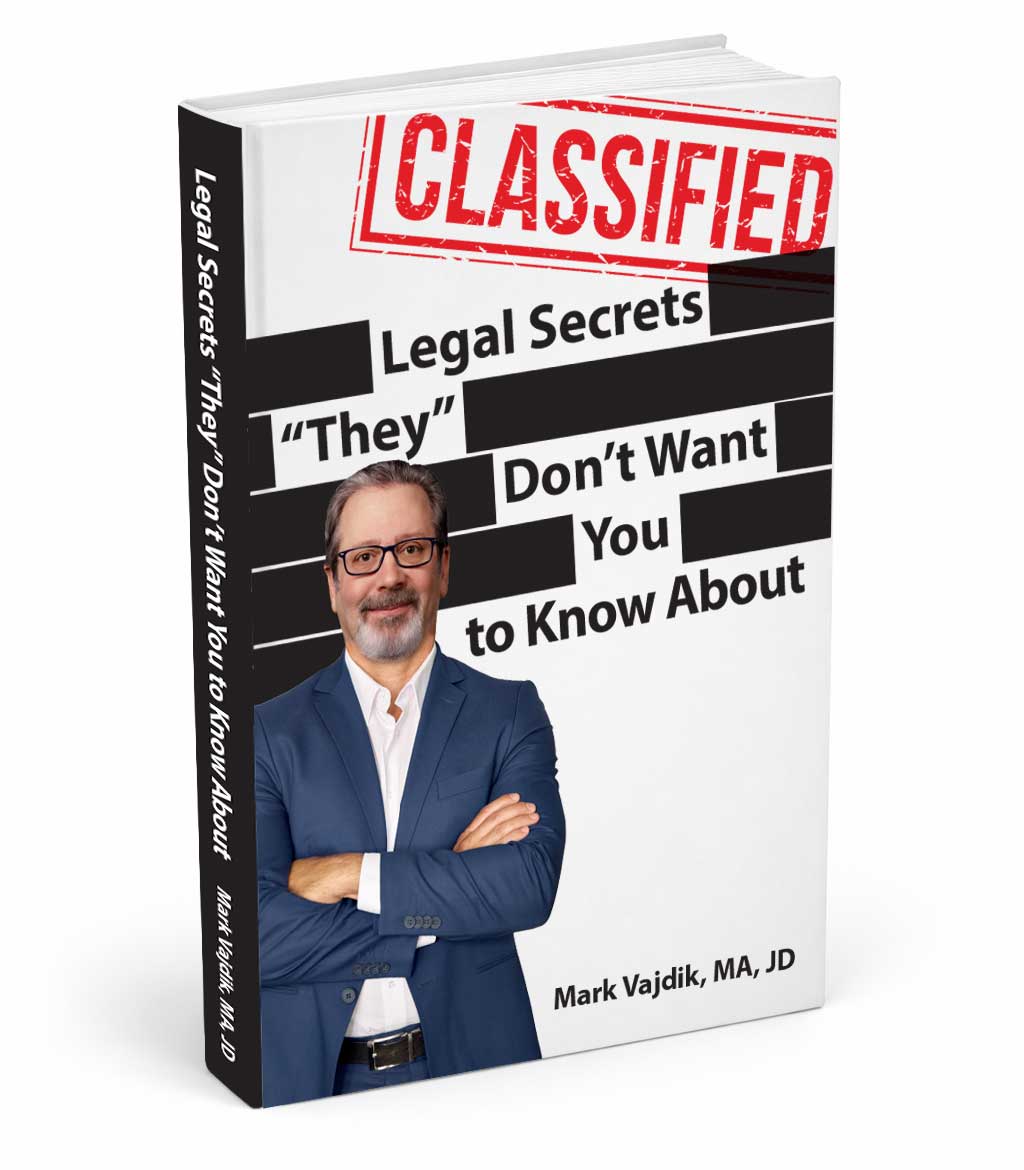
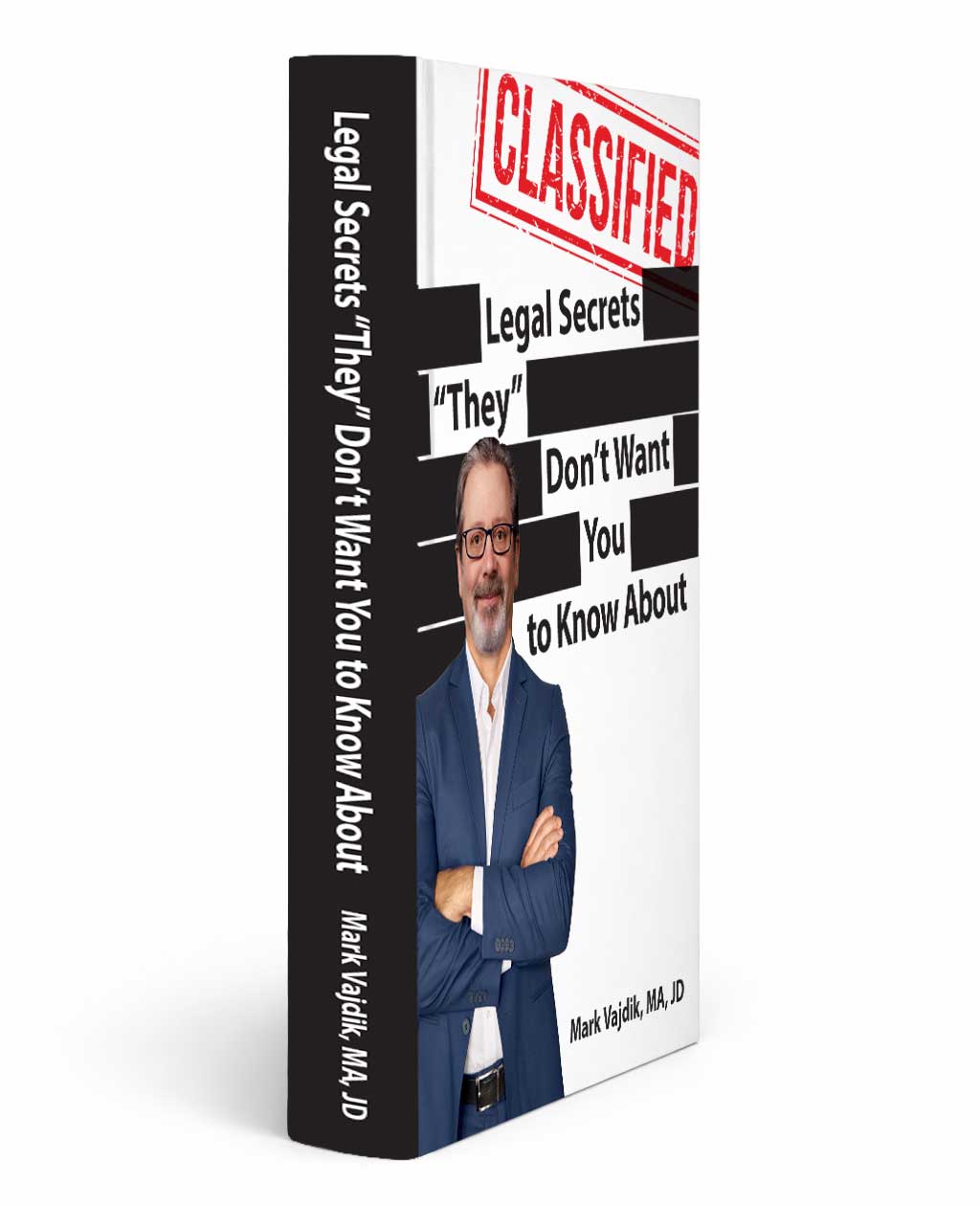
Legal Secrets "They" Don't Want You to Know About
“This isn’t information people go looking for. It’s information they wish they had earlier.”
– Mark Vajdik, MA, JD
The truth is that the law is not just something that lives in courtrooms, police stations, and dramatic television cross-examinations. It lives in your employment paperwork, your insurance policies, your divorce judgment, your child support order, your lease, your deed, your severance agreement, your social media posts, your traffic stop, your medical bills, and the fine print you did not read because you were tired and just wanted to move on with your day. The law shows up in ordinary life all the time, usually without warning and often at the exact moment when you are least prepared to deal with it.
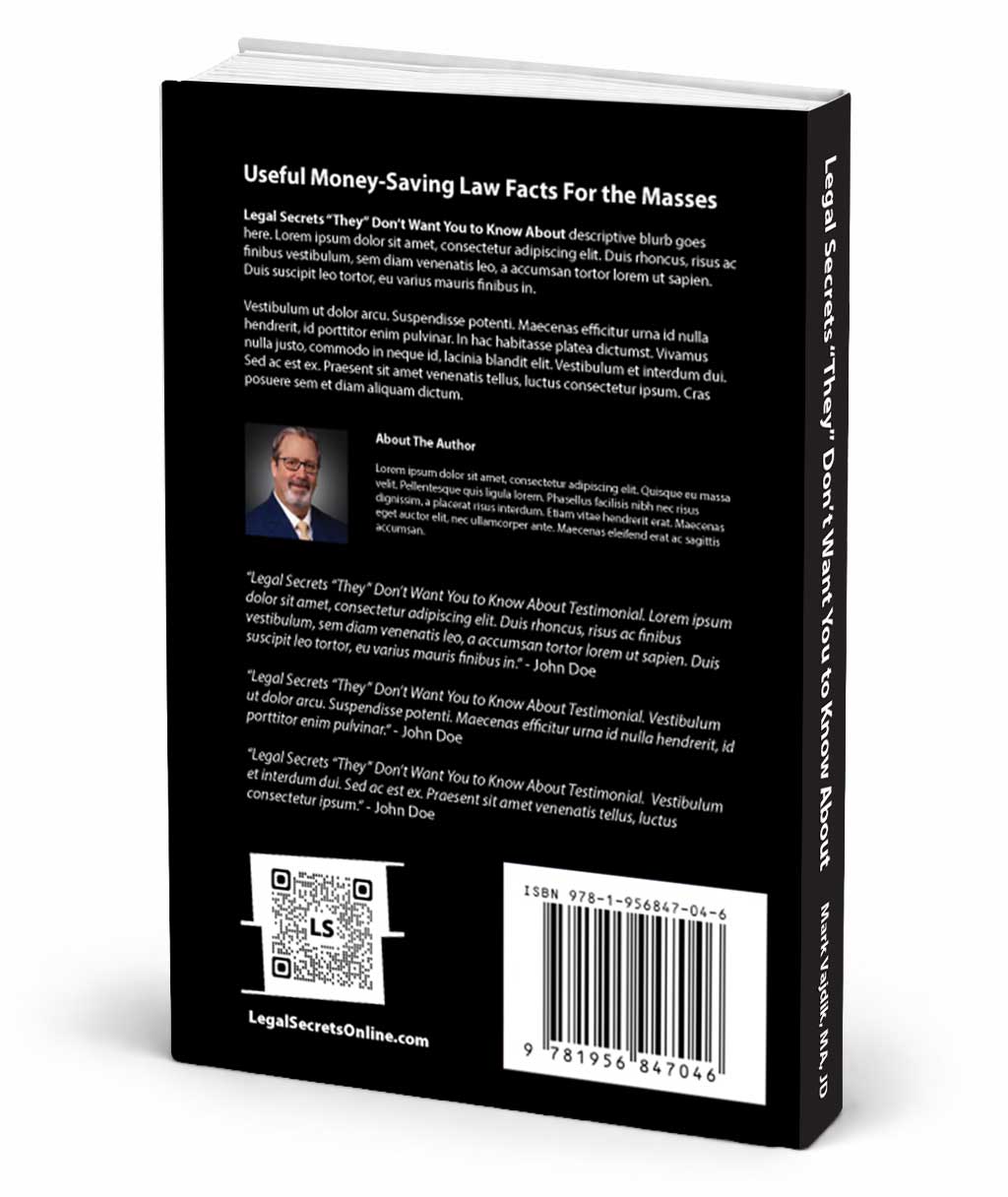
That is where people get hurt — financially, professionally, emotionally, and sometimes in ways that take years to unwind. And often, the damage begins with one simple problem: they didn’t know what they were walking into. Legal Secrets “They” Don’t Want You To Know About is a practical legal book for non-lawyers designed to reveal the everyday legal rights, hidden traps, costly mistakes, loopholes, and misconceptions most people never think about until the law suddenly becomes their problem.
Buy direct here and save. Also available at:



The system already knows the rules. This book was written so you can know them, too.
Most people assume a lawyer is a lawyer—that once you hire one, you’re covered. But choosing the wrong type of attorney for your situation can quietly damage your case before it even begins. The difference isn’t always obvious upfront, and by the time people realize something is off, they’re already invested. Understanding how to choose the right lawyer for your specific legal issue could be the difference between a strong position and a costly mistake.
Unwanted calls, robocalls, and aggressive telemarketers feel like part of modern life—but they don’t have to be. Most people tolerate constant interruptions because they assume there’s nothing they can do. In reality, there are legal protections and strategies that can significantly reduce or even stop these calls. The problem is, almost nobody knows how or when those protections actually apply.
During a traffic stop, one simple question can shape everything that follows. Most drivers respond instinctively, trying to be cooperative or helpful, not realizing that their answer can create problems they didn’t have before. What feels like a harmless exchange is actually part of a legal interaction with real consequences. Knowing your rights during a traffic stop—and how to handle that first moment—can make a bigger difference than people expect.
Debt collectors and financial claims often rely on one thing: confidence. When someone tells you that you owe money, most people assume it must be true and act quickly to resolve it. But the law doesn’t work on assumptions—it works on proof. There are specific rights tied to debt collection and financial claims that can completely change how these situations play out, if you know how to use them.
Legal notices, court summons, and official documents are easy to avoid—until they aren’t. Many people delay opening or responding to legal paperwork because they feel overwhelmed or unsure what to do. What they don’t realize is that ignoring these documents can trigger consequences that move forward without them. By the time they decide to act, the situation may already be far more difficult to fix.
There’s a common belief that cooperating with police questioning is the best way to resolve a situation quickly. In reality, you may have important rights when it comes to answering questions, explaining yourself, or making statements during an encounter. Many people talk because it feels natural—not because it’s necessary. Understanding your right to remain silent, and when to use it, is one of the most important legal protections most people never fully understand.
Most people assume that law enforcement is required to be truthful during questioning. That assumption shapes how they respond in high-pressure situations. But the rules around police interrogation are not what most people expect. Knowing how these interactions actually work—and what is allowed—can completely change how you approach them.
“Probable cause” sounds like a high legal standard, something that requires strong evidence or certainty. In practice, it operates very differently. The threshold for police action is often lower than people assume, and that misunderstanding leads to confusion during real-world encounters. Knowing what this standard actually means can change how you view your rights and expectations.
Ownership feels simple: if it’s yours, it’s yours. But legally, the concept of property and ownership can be more complicated than people expect. There are situations where control, access, and rights don’t line up the way they should. Understanding where those gaps exist can prevent surprises that most people never see coming.
Most people think in terms of two extremes: free or under arrest. But there’s a gray area in between that carries its own rules and consequences. Being detained—even temporarily—can affect what happens next in ways people don’t anticipate. Recognizing that distinction is key to understanding your rights in real situations.
“At-will employment” is one of the most commonly misunderstood legal concepts in the workplace. People often hear that it means an employer can do anything at any time—but that’s not the full picture. There are limits, exceptions, and nuances that most employees never learn until they’re already dealing with a problem.
Employees often turn to Human Resources expecting support, guidance, or protection. What they don’t always realize is how HR actually functions within a company. The difference between expectation and reality can impact how workplace issues unfold. Knowing how HR operates can change how you handle workplace disputes, complaints, and internal conversations.
That employee handbook most people skim—or ignore entirely—can carry more weight than expected. Policies, procedures, and agreements outlined in those pages can influence what happens when problems arise at work. Understanding how these documents function legally can prevent surprises later.
Non-compete agreements are often misunderstood. Some may not hold up legally, yet they still influence behavior and career decisions every day. Many employees follow restrictions they could challenge—simply because they don’t know their options. That gap between perception and reality has real consequences.
Being classified as an independent contractor instead of an employee can affect pay, benefits, taxes, and legal protections. But that classification isn’t always accurate. Many people accept the label without realizing it may not reflect their actual situation. Understanding the difference can have long-term financial and legal implications.
When dealing with an insurance claim, many people assume the company is there to evaluate the situation fairly. In reality, insurance companies operate with their own interests in mind. That doesn’t mean they act improperly—but it does mean the process isn’t as neutral as it may appear. Understanding that dynamic changes how you approach a claim.
After an accident or claim, you may be asked to give a recorded statement. It often feels routine—just a way to explain what happened. But the timing, wording, and context of that conversation can influence how your claim is evaluated. Knowing why these statements are taken can help you approach them more carefully.
Many drivers believe they have “full coverage” insurance and assume that means they’re protected in any situation. But that phrase doesn’t have a fixed legal definition. The gap between what people think they have and what their policy actually covers can lead to serious surprises.
Time plays a bigger role in legal and insurance matters than most people realize. Waiting, postponing, or assuming things can be handled later can quietly affect the outcome. In some cases, delays change the leverage or value of a situation in ways that aren’t obvious at first.
Most people assume that if the damage is serious enough, the compensation will match it. But in many insurance claims, there’s a ceiling that exists regardless of how strong your case is. That limit can quietly shape the outcome from the very beginning—even if nobody mentions it upfront. Understanding how insurance policy limits work can completely change how you evaluate a situation and what options you pursue.
A lot of people believe that if something isn’t written down, it doesn’t count. That assumption leads to agreements being made casually, without much thought. But certain verbal agreements can still carry legal weight, even when there’s no paperwork involved. The real challenge isn’t just what was agreed to—it’s what can be proven later.
Most people focus on the main terms of an agreement and skip over the rest. The smaller text feels less important, easier to ignore, and harder to understand. But in many cases, that’s exactly where the most important rules are hidden. Once you sign, those details can control how everything plays out.
Starting a business often comes with the belief that personal assets are protected. That’s one of the main reasons people form companies in the first place. But certain agreements can quietly undo that protection without people fully realizing it. Knowing when that line is crossed can make a major difference in financial risk.
Co-signing is often seen as a simple way to help someone out. It feels temporary, low-risk, and based on trust. But legally, it can place you in a position that’s far more serious than most people expect. The responsibility doesn’t always work the way people assume it will.
Many people think of bankruptcy as a reset—a way to wipe the slate clean and start over. While it can provide relief, it doesn’t eliminate every obligation. Some debts and consequences remain, even after the process is complete. Knowing what carries through can change how people approach the decision.
When custody issues arise, many people expect the outcome to feel balanced or fair. But the legal system doesn’t focus on fairness between adults—it looks at something else entirely. That difference can lead to outcomes that surprise people who weren’t prepared for it. Understanding how these decisions are actually made can shift expectations early on.
Major life decisions are often made based on emotion, timing, or personal circumstances. What people don’t always consider is how those decisions can affect legal standing, finances, and future outcomes. Acting too quickly—or waiting too long—can have consequences that aren’t obvious in the moment.
Orders of protection can be put in place quickly and can take effect immediately. They don’t just exist on paper—they can change where you go, who you see, and what you’re allowed to do. Many people underestimate how serious they are until they’re already dealing with one.
Your phone may know more about your life than almost anyone else. Text messages, photos, location information, emails, social media activity, call records, and other digital evidence can become relevant in divorce, custody, protection-order, and other family-law disputes. What feels private or temporary when you send it can become much more permanent when a legal fight begins.
Agreements made before or during a marriage aren’t only for high-net-worth individuals. They’re tools that can clarify expectations and prevent disputes later on. Many people avoid them because they feel unnecessary—until they’re dealing with a situation where they would have helped.
When buying property, most people focus on the present—price, condition, and location. But some of the biggest risks come from the past. Issues tied to previous ownership or documentation can surface later. Title insurance exists for a reason, but many people don’t fully understand what it protects against.
Homeowners associations often seem like simple rule-setting bodies. In reality, they can enforce restrictions, impose penalties, and take action that affects property rights. Many people don’t realize the scope of that authority until they’re already dealing with it.
Unpaid property taxes don’t just sit unresolved—they trigger legal consequences automatically. These liens can attach without much warning and create complications quickly. Understanding how property tax liens work can prevent situations from escalating.
It sounds like something that shouldn’t happen, but it can under certain conditions. Over time, property boundaries and usage can lead to outcomes that feel surprising—or even unfair. Most homeowners never think about this until it becomes an issue.
When dealing with tenant issues, it may seem faster to take matters into your own hands. But there are strict rules around eviction, and skipping the process can create bigger legal problems. Knowing the proper steps is critical before taking action.
Most people imagine criminal cases ending in a dramatic courtroom trial with a judge, jury, and final verdict. In reality, many criminal cases are resolved through plea agreements or other dispositions before a trial ever begins. In reality, the vast majority of cases are resolved through plea deals long before that ever happens. These agreements are often made under pressure, with limited time and difficult choices. Understanding how plea bargains work—and why they’re used so often—can completely change how you view the legal system.
Expungement sounds like a clean slate, and many people assume it completely erases a record. But the reality is more complicated than that. Certain records may still exist in places people don’t expect, even after the process is complete. Knowing what expungement actually does—and what it doesn’t—can prevent false expectations and future surprises.
Bail is supposed to ensure that someone returns to court, not to punish them. But in practice, it can have serious financial and personal consequences. People can lose jobs, miss obligations, and face pressure before their case is even decided. Understanding how bail works helps explain why it feels like punishment, even when it technically isn’t.
Self-defense is often talked about in simple terms, as if it’s obvious when it applies. But in a legal setting, it’s not just about what happened—it’s about what can be proven. The details, timing, and evidence all matter in ways people don’t expect. What feels justified in the moment doesn’t always translate clearly later.
Most people know they have heard the words “right to remain silent,” but far fewer understand exactly when that right applies, how it must be invoked, and how the surrounding circumstances can matter. What you say, what you do, and when an encounter takes place can all affect the legal analysis. Knowing that the rule is more complicated than the television version can change how you think about high-pressure encounters.
Posting photos or content online feels simple and personal, but control over that content can disappear quickly. Even if you technically “own” something, that doesn’t mean you control how it’s used, shared, or distributed. Once something is out there, it can move in ways that are hard to track or stop. Understanding that difference can change how you approach sharing anything online.
Recording a conversation might seem like a smart way to protect yourself, but the rules aren’t the same everywhere. Some places allow it freely, while others require consent from everyone involved. Many people assume the law is consistent, but that assumption can lead to serious problems. Knowing how recording laws vary by state can help you avoid unintended consequences.
Not everything that feels unfair, offensive, or damaging is considered defamation under the law. The key distinction often comes down to whether something is presented as a false fact or simply an opinion. This difference is more important than most people realize. Misunderstanding it can lead to frustration or unnecessary legal action.
Taking a screenshot feels like capturing proof, but it doesn’t automatically mean it will hold up in a legal setting. There are questions about authenticity, context, and how the information was obtained. What seems clear on your screen may not be as straightforward later. Knowing what makes digital evidence usable can change how you document things.
Private messages can feel private because only a few people were supposed to see them. But once a message has been sent, screenshotted, forwarded, subpoenaed, discovered, or voluntarily shared, that expectation can disappear quickly. Texts, direct messages, emails, and other communications can become part of a legal dispute in ways most people never expect when they first hit “send.”
Trusts are often mentioned in estate planning, but many people don’t fully understand what they are or how they work. They can provide structure, control, and flexibility in managing assets. At the same time, they come with rules and limitations that need to be understood. Learning the basics can help you decide whether a trust makes sense for your situation.
Some legal tools offer strong protection—but they require giving something up in return. Irrevocable trusts are a good example of that tradeoff. Once they are set up, control over certain assets is limited or removed entirely. Understanding that balance is critical before making any decisions.
Many people assume their assets will naturally go where they want them to go. But without a will, the law steps in and decides based on a fixed set of rules. Those rules don’t consider personal preferences or unique circumstances. Planning ahead allows you to control what happens instead of leaving it to the system.
Some estates can be handled through simpler legal processes, but not all situations qualify. Small estate affidavits can save time and expense when they apply. The challenge is knowing when they can be used and what requirements must be met. Without that understanding, people may miss an easier path.
Legal documents often feel unnecessary—until something happens and they’re suddenly critical. Having the right paperwork in place ahead of time can prevent confusion, delays, and disputes. Waiting until a problem arises limits your options. Preparation gives you more control over how things unfold.
Nobody expects to need every legal topic in this book at the same time. That is exactly the point. You buy Legal Secrets before you know which chapter may suddenly become the one you desperately wish you had read earlier.
The legal system already knows the rules, the exceptions, the deadlines, and the fine print. Get the book now, and start closing the knowledge gap before somebody else benefits from it.
This website, the book Legal Secrets They Don’t Want You to Know, and all related articles, videos, subscription materials, downloads, emails, and other content are provided for general educational and informational purposes only.
Nothing on this website constitutes legal advice, a legal opinion, a recommendation about what you should do in any specific situation, or the practice of law. Use of this website, purchase of the book, enrollment in any subscription, submission of a contact form, or communication through this website does not create an attorney–client relationship with Mark Vajdik, MVP Injury Law, the Law Offices of Mark Vajdik LLC, or any affiliated lawyer, law firm, author, publisher, contributor, or service provider.
Legal rules vary by jurisdiction and change over time. The information presented may not be current, complete, or applicable to your particular facts, state, court, agency, deadline, or legal problem. You should not rely on this website or the book as a substitute for advice from a licensed attorney in your jurisdiction.
By selecting “I Understand and Agree,” you acknowledge that you have read, understood, and agreed to this disclaimer and the Terms & Conditions.